Yoga gets all the attention. And for good reason - it is one of the most accessible, well-studied, and widely available movement practices in the world. But it is not the only one, and for some people, it is not the right one.
If you have ever felt disconnected from your body, stuck in your head, or like your exercise routine is keeping you fit but not making you feel any better, there is a world of practice beyond yoga that might be exactly what you are looking for. Somatic movement. Breathwork. Cold water immersion. Intentional walking. Practices that do not require flexibility, Instagram-worthy poses, or any previous experience. Just a willingness to pay attention to what your body is telling you.
Why “beyond yoga”
This is not an argument against yoga. Yoga is brilliant. The problem is that the Western wellness industry has made yoga the default answer to every question about body-mind connection, and for a lot of people, it does not quite land.
Some people find yoga too slow. Others find it intimidating - the flexibility, the Sanskrit, the perceived spiritual dimension. Some have tried it and it felt nice but never quite delivered the shift they were looking for. And plenty of people (especially men) have written off the entire category of mind-body practice because their only reference point is a yoga class they did not enjoy.
The practices in this guide are different. They are less structured, more intuitive, and often more immediately impactful. They do not require a mat, a studio, or a teacher with 500 hours of certification. They require your body and your attention. That is it.
Somatic movement: what it is and why it matters
Somatic comes from the Greek word soma, meaning “the body as experienced from within.” Somatic movement is any movement practice that prioritises internal sensation over external form. In plain English: it is about how movement feels, not how it looks.
Most exercise is externally focused. Lift this weight. Run this distance. Hit this number. Hold this pose. Somatic movement flips that entirely. Instead of asking “am I doing this right?” you ask “what am I feeling?”
This matters because most of us have lost the connection between our bodies and our conscious awareness. We spend our days in our heads - thinking, planning, worrying, scrolling - and our bodies become something we drag around, maintain, and occasionally punish at the gym. Somatic movement restores the conversation.
What somatic movement looks like in practice
There is no single “somatic movement” technique. It is an umbrella that includes many approaches:
- Feldenkrais Method. Gentle, exploratory movements designed to improve awareness and release habitual tension patterns. Extremely slow, extremely subtle, and remarkably effective.
- Body-Mind Centering. Combines movement, touch, and guided awareness to explore the body's systems - skeletal, muscular, organ, fluid. More experiential than clinical.
- Continuum Movement. Uses breath, sound, and micro-movements to access deeper layers of physical sensation. Unusual and sometimes surprising.
- Freeform somatic exploration. Unstructured movement guided by a facilitator who gives prompts: “notice where your weight is,” “let your spine move in a way that feels good,” “follow whatever impulse arises.” This is the approach Alessandro Gibilaro uses at Elysium Retreats.
Who is somatic movement for?
Everyone. Genuinely. It does not require fitness, flexibility, or any previous experience. It is particularly valuable for:
- People who exercise regularly but feel disconnected from their bodies
- Anyone recovering from burnout, stress, or emotional exhaustion
- People with chronic tension or pain that does not respond to conventional treatment
- Anyone who has tried yoga and felt it was not quite right for them
- People who spend most of their day sitting, thinking, and staring at screens
“Al believes in one thing: move the body, change the mind. His somatic movement sessions aren't about reps or performance. They're about reconnecting with how it feels to be alive.”
Breathwork: what it is and how to start
Breathwork is the deliberate use of breathing patterns to change your physical, mental, or emotional state. That sounds simple because it is. It is also one of the most powerful tools available to you, and you carry it with you every moment of every day.
The science is clear: how you breathe directly affects your nervous system. Fast, shallow breathing activates your sympathetic nervous system (fight or flight). Slow, deep breathing activates your parasympathetic nervous system (rest and restore). By changing your breath, you can shift your body's stress response in real time.
Types of breathwork
Breathwork ranges from simple techniques you can use at your desk to intensive practices that create profound altered states. Here are the main categories:
Calming breathwork (parasympathetic activation)
- Box breathing. Inhale for 4 counts, hold for 4, exhale for 4, hold for 4. Used by Navy SEALs, surgeons, and anyone who needs to stay calm under pressure. Simple, effective, and immediately available.
- Extended exhale breathing. Inhale for 4 counts, exhale for 6-8 counts. The extended exhale directly stimulates the vagus nerve and activates the relaxation response. One of the most evidence-based techniques available.
- Physiological sigh. A double inhale through the nose followed by a long exhale through the mouth. Discovered by Stanford researchers as the fastest way to reduce stress in real time. Takes 30 seconds.
Energising breathwork (sympathetic activation)
- Wim Hof Method. 30-40 deep breaths followed by a breath hold. Creates a controlled stress response that builds resilience and tolerance. Often combined with cold exposure.
- Kapalabhati. Rapid, rhythmic exhales through the nose with passive inhales. Energising and clarifying. A traditional yogic technique that works independently of yoga practice.
Transformational breathwork
- Holotropic breathwork. Extended breathing patterns (45-90 minutes) that create non-ordinary states of consciousness. Developed by Stanislav Grof as an alternative to psychedelic therapy. Powerful, sometimes intense, best done with experienced facilitators.
- Connected breathing / circular breathing. Continuous breathing without pause between inhale and exhale. Creates an accumulating effect that often releases stored emotion. This is the style most commonly offered at wellness retreats.
How to start breathwork as a beginner
Start simple. Do not jump straight into an hour of holotropic breathing - that is like running a marathon on your first day of training. Begin with:
- Morning box breathing (5 minutes). Sit comfortably. Breathe in for 4 counts, hold for 4, out for 4, hold for 4. Five minutes. Every morning. This alone will noticeably change your baseline stress level within two weeks.
- Physiological sighs (as needed). Double inhale through the nose, long exhale through the mouth. Use whenever you feel stressed, anxious, or overwhelmed. Takes 30 seconds.
- Evening wind-down (5 minutes). Extended exhale breathing. Inhale for 4, exhale for 7-8. Lying in bed before sleep. This is more effective than any sleep supplement.
Once these feel natural, explore longer practices. Find a breathwork class or workshop. Try a guided session online. Or, better yet, experience it in a retreat setting where the container is held by someone who knows what they are doing and the group energy amplifies the experience.
Breathwork is one of the core elements of Elysium Retreats. Experienced facilitators, a safe group setting, and a stunning off-grid environment. The kind of breathwork experience you cannot replicate at home.
Explore the Elysium ExperienceCold water immersion: the uncomfortable practice that works
Cold water immersion - ice baths, cold showers, wild swimming in cold rivers or the sea - has moved from fringe biohacking into mainstream wellness for one reason: it works, and the science backs it up.
What cold exposure does to your body
- Activates the vagus nerve. Cold water triggers a powerful parasympathetic response after the initial shock, which helps regulate your nervous system over time.
- Releases norepinephrine. A 2-3x increase in this neurotransmitter, which improves mood, focus, and alertness. This is why you feel extraordinary after a cold plunge.
- Reduces inflammation. Cold exposure decreases inflammatory markers, which is relevant for chronic stress, muscle recovery, and general well-being.
- Builds stress resilience. Regular cold exposure trains your body to handle controlled stress, which translates to better handling of uncontrolled stress in daily life.
How to start
You do not need an ice bath. Start with 30 seconds of cold at the end of your normal shower. Just cold water on your body for half a minute. Breathe through it. Notice the impulse to escape and choose to stay.
Gradually extend the duration. Over weeks, work up to 2-3 minutes. When that feels manageable, try a cold outdoor swim or an ice bath. The progression matters - jumping straight into 3 minutes of ice is not brave, it is unnecessary.
At Elysium, cold water immersion is part of the daily programme. River swimming in the Mondego, cold plunge pools, and the contrast between sauna heat and cold water. In a group setting, with encouragement and shared experience, cold exposure becomes something people look forward to rather than dread.
Intentional walking and nature immersion
Walking is the most underrated movement practice in the world. Not hiking (though hiking is great). Not power walking or step-counting. Just walking, slowly, with attention.
The Japanese practice of shinrin-yoku (forest bathing) has been studied extensively and the findings are consistent: time spent walking in natural environments reduces cortisol, lowers blood pressure, improves immune function, and increases feelings of calm and clarity.
The key difference between a regular walk and intentional walking is attention. No headphones. No phone. No destination. Just walking, and noticing. The temperature of the air. The texture of the ground. The sounds. The quality of the light. This is a form of moving meditation that requires zero training and is available to everyone.
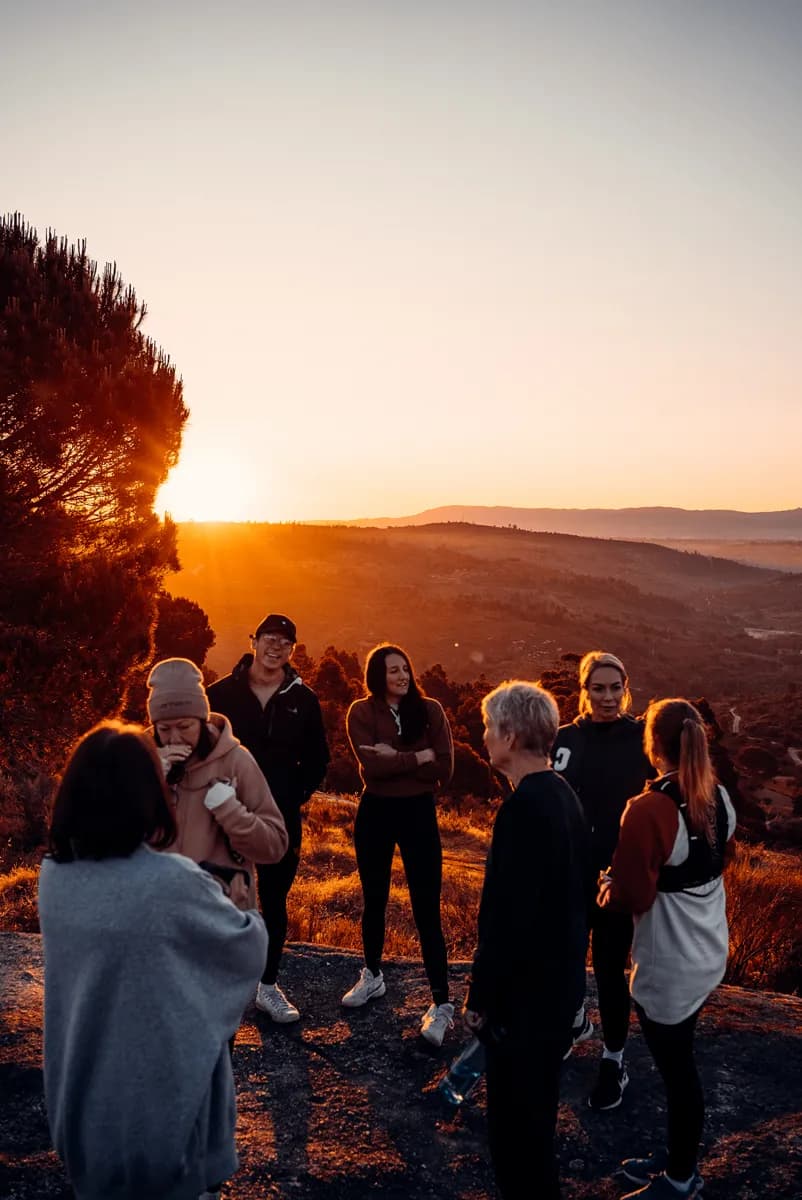
In a retreat setting, nature immersion becomes something deeper. When you are on 40 acres of protected wilderness by a river, with no traffic, no notifications, and no schedule for the next two hours, walking becomes a completely different experience from a lunchtime stroll in your local park.
The body-mind connection: why these practices work
There is a common thread running through somatic movement, breathwork, cold exposure, and intentional walking. They all do the same thing: they bring you back into your body.
Modern life is an exercise in disembodiment. You sit at a desk, stare at a screen, live in your thoughts, and use your body primarily as a transport system for your brain. The result is a disconnection that manifests as stress, anxiety, tension, emotional numbness, and the vague sense that something is missing even when everything is technically fine.
Neuroscience now understands that this is not metaphorical. The body and brain communicate constantly through the vagus nerve, the endocrine system, and the enteric nervous system (your gut). When these communication channels are disrupted by chronic stress, poor posture, shallow breathing, and lack of physical engagement, you literally lose contact with yourself.
The practices in this guide restore that contact. Not through intellectual understanding (you cannot think your way back into your body) but through direct physical experience. When you move somatically, breathe consciously, expose yourself to cold water, or walk in nature with genuine attention, you are re-establishing a conversation that most people have not had in years.
That is why these practices feel so different from a gym session or a yoga class. They are not about fitness or flexibility. They are about coming home to your body. And when you do, everything else starts to shift - your mood, your relationships, your sleep, your capacity for presence, your ability to feel.
How to get started: a practical guide
You do not need to overhaul your life. Start with one practice and give it two weeks of consistent attention. Here are three starting points depending on what resonates:
If you want to feel calmer
Start with breathwork. Five minutes of box breathing every morning. Use physiological sighs throughout the day when you feel stress rising. Add 30 seconds of cold at the end of your shower. Within two weeks, you will notice a tangible difference in your baseline stress level.
If you want to feel more connected to your body
Start with somatic movement. Set a timer for 10 minutes. Stand barefoot on a comfortable surface. Close your eyes. Move in whatever way feels good - no rules, no form, no judgement. Let your body lead. This will feel strange at first. That strangeness is the point - you are meeting a part of yourself you have been ignoring.
If you want to feel more alive
Start with cold exposure. End every shower with 30 seconds of cold water. Focus on your breath. Notice the sensation without fighting it. Within a week, you will start to crave it. The post-cold euphoria is not placebo - it is norepinephrine and endorphins doing exactly what they are designed to do.
Why these practices work best on retreat
You can do all of this at home. But there is a reason people travel across Europe to do breathwork in Portugal instead of their living room.
Environment matters. Breathwork in a circle of 22 people on a 40-acre estate by a river is a fundamentally different experience from breathwork alone on your bedroom floor. The setting, the energy, the shared vulnerability - it amplifies everything.
Facilitation matters. Having an experienced practitioner guide you through somatic movement or breathwork means you go deeper and stay safer than you would alone. They hold the space, read the room, and know when to push and when to ease off.
Sustained immersion matters. Ten minutes of breathwork on a Tuesday morning is useful. Five days of movement, breathwork, cold exposure, nature, and coaching is transformative. The cumulative effect of sustained practice in a supportive environment is categorically different from isolated sessions at home.
Community matters. Sharing these experiences with others creates a kind of bond that is hard to find elsewhere. When you have breathed through a cold plunge together, had a breakthrough in a movement session, and then sat around a dinner table talking about what you felt - those people are no longer strangers.
Movement and breathwork at Elysium
At Elysium Retreats, movement and breathwork are not add-ons. They are core elements of the experience, woven into every day alongside coaching, connection, nature, and communal dining.
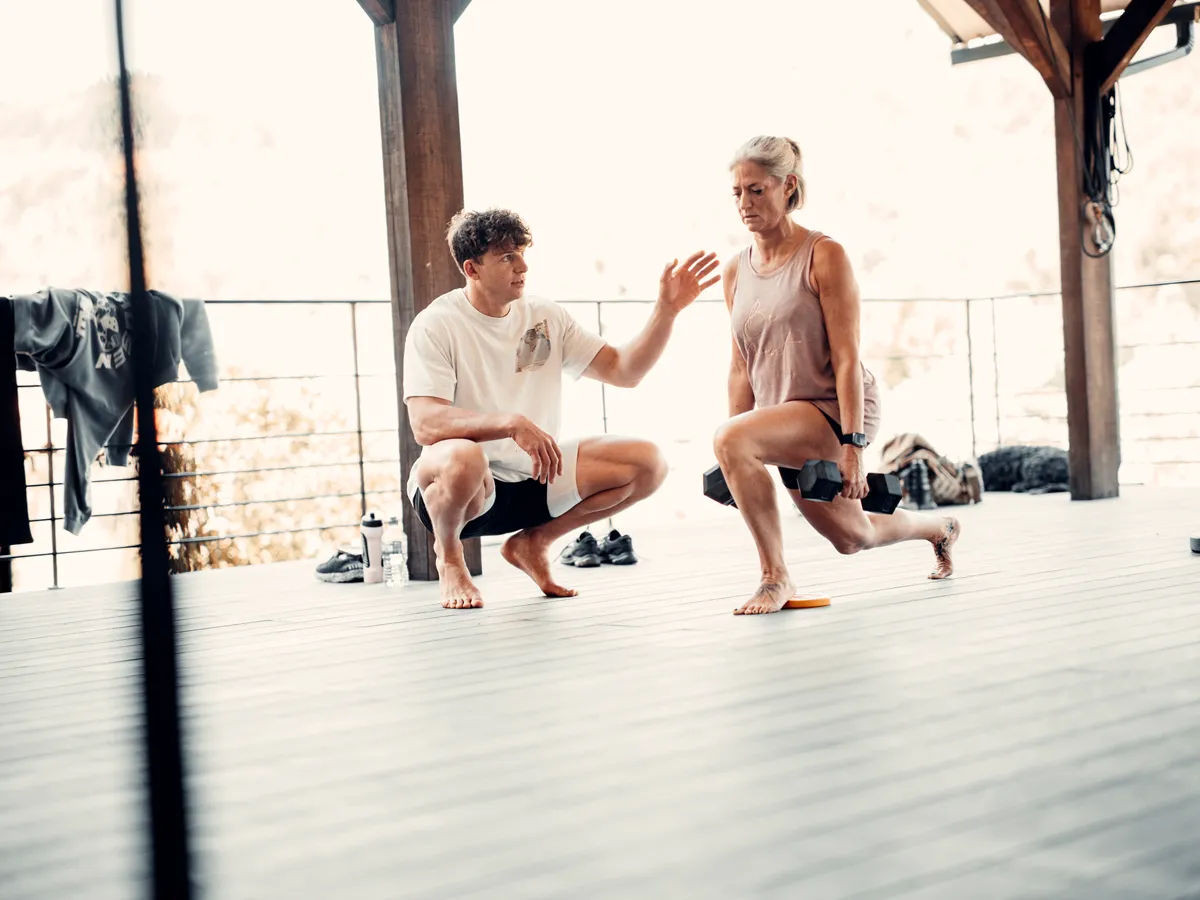
Alessandro Gibilaro leads the movement programme. His approach is intuitive, exploratory, and accessible to every fitness level. There are no poses to copy, no sequences to memorise, and no mirrors to check yourself in. Just your body, his guidance, and the space to discover how it feels to move without performance or judgement.
Breathwork sessions are facilitated by the team as a collective experience. The group setting intensifies the practice - there is something about breathing together, in sync, in a space held with intention, that creates effects you simply cannot access alone.
Cold water immersion happens in the River Mondego and through contrast therapy with the on-site sauna. Nature immersion is constant - you are on 40 acres of forest and river, completely off-grid, for five days. Walking, swimming, sitting by the water, feeling the sun - it is movement at its most natural.
“A place to build, refine and sharpen core life skills, while having a genuinely good time with some really cool, inspirational people in an amazing rural setting.”
Experience somatic movement, breathwork, and cold water immersion at Elysium Retreats. September 16-21, 2027. Central Portugal. 22 spaces.
View Pricing and BookFrequently asked questions
What is the difference between somatic movement and yoga?
Yoga typically follows set sequences and poses with correct alignment. Somatic movement has no prescribed forms - it is guided by internal sensation and personal exploration. Both are valuable. Somatic movement is often more accessible to people who find yoga intimidating or prescriptive.
Is breathwork safe?
Calming breathwork (box breathing, extended exhale) is safe for virtually everyone. More intensive practices (holotropic, Wim Hof) should be approached gradually and ideally with a facilitator, especially the first few times. People with cardiovascular conditions, epilepsy, or who are pregnant should consult a doctor first.
How cold does the water need to be?
For benefits, research suggests water below 15°C. A cold shower at home is typically 10-15°C. Ice baths are usually 2-5°C. River swimming varies by season. Start at whatever temperature feels challenging but manageable, and work your way down gradually.
Do I need to be flexible for somatic movement?
No. Flexibility is irrelevant. Somatic movement meets you exactly where your body is. If you can stand, sit, or lie down, you can do somatic movement.
Can these practices help with anxiety?
Yes. Breathwork and somatic movement are both evidence-based approaches to anxiety reduction. They work by directly regulating the nervous system rather than trying to manage anxious thoughts cognitively. Many people find them more immediately effective than talk therapy for physical symptoms of anxiety.
How long before I notice a difference?
Breathwork creates an immediate shift in state - you will feel different after your first 5-minute session. Somatic movement benefits accumulate over days and weeks. Cold exposure creates an immediate post-session boost (norepinephrine) and longer-term resilience over weeks of consistent practice. On a 5-day retreat, most people notice a significant shift by day three.