There is a difference between a holiday that relaxes you and an experience that changes you. A personal development retreat is designed to be the second kind. Not because someone gives you a manual for living a better life, but because stepping away from your routine - with the right people, in the right environment, with the right guidance - creates the conditions for something to shift.
The personal development industry is full of noise. Weekend seminars with keynote speakers. Online courses promising transformation in six weeks. Books with “framework” in the title. Some of it is useful. Most of it stays in your head. A retreat takes it out of your head and puts it in your body, your relationships, and your lived experience. That is the difference.
What makes a personal development retreat different from a holiday
A holiday is a break from your life. A retreat is a confrontation with it. Not in an aggressive, uncomfortable way - but in the sense that you are there to look at things honestly. How you spend your time. What you have been avoiding. What matters to you and what does not anymore.
The key differences:
- Structure and facilitation. A retreat has a programme designed by people who know what they are doing. Sessions build on each other. The sequence matters. Someone is holding the space and guiding the process.
- Intentionality. You are not there to relax and do nothing (though there will be plenty of that). You are there with a purpose, even if that purpose is simply “to work out what my purpose is.”
- Community. You share the experience with other people who are also looking for something. That shared vulnerability creates a kind of intimacy that takes years to build in normal life and happens in days on retreat.
- Discomfort is part of the design. Not suffering, but the productive discomfort of trying something new, saying something true, or sitting with a feeling you normally distract yourself from. Growth does not happen inside your comfort zone.
Types of personal development retreats in Europe
Coaching-led retreats
Built around workshops, seminars, and group coaching with trained facilitators. The focus is on self-awareness, mindset, values, and making decisions about your life with more clarity. Good ones are interactive and participatory, not lecture-based.
Holistic retreats
Combine coaching with physical practices - movement, breathwork, cold exposure, nature immersion. The philosophy is that personal development is not just a mental exercise. Your body, your nervous system, and your physical habits are all part of the picture.
Mindfulness and meditation retreats
Focused on awareness, presence, and the ability to observe your own thoughts without being controlled by them. Ranges from structured meditation programmes (Vipassana, Zen) to more accessible mindfulness-based retreats that combine meditation with journaling, walking, and gentle movement.
Adventure-based retreats
Use physical challenges - hiking, climbing, wild swimming, outdoor expeditions - as a vehicle for personal growth. The principle is that pushing your physical limits in a supported environment builds confidence, resilience, and self-knowledge.
Creative retreats
Writing, art, music, or other creative practices as a path to self- expression and personal insight. Less common in the UK retreat market but growing. Particularly powerful for people who process experience through making things rather than talking about them.
Men's and women's retreats
Gender-specific spaces designed to explore issues that arise more freely in single-gender groups. Useful for some, but not the only model. Mixed-gender retreats offer something different - the chance to connect with people across the full spectrum of human experience.
Who goes on personal development retreats
The short answer: people who are ready for something to change but are not sure what.
The longer answer involves a few common profiles:
- The successful-but-unfulfilled professional. Career is going well. Ticks all the boxes. But there is a gap between what their life looks like and how it feels. They are looking for meaning, not more achievement.
- The life-transition navigator. Going through a divorce, a career change, turning 40, becoming a parent, losing a parent, or simply realising that the life they built is not the life they want. A retreat provides space to process the transition with support.
- The burnt-out high performer. Running on empty, operating on autopilot, and knowing something needs to change but not having the energy to figure out what. (See our burnout recovery guide for more on this.)
- The curious first-timer. Has seen someone else's retreat experience and thought “that could be me.” No specific crisis, just a sense that there might be more available to them than their current routine offers.
- The returning guest. Someone who has been before and knows the value. They come back not because they are broken, but because they have learned that regular investment in themselves pays compound interest.
“I came last year and had such a lovely experience that I wanted to come back. I honestly feel like a different person compared to last year.”
What actually happens on a personal development retreat
This varies, but the best retreats share a rhythm that balances challenge with rest, structure with freedom, and individual reflection with group connection.
Workshops and seminars
Facilitated sessions that explore themes like identity, values, emotional intelligence, confidence, purpose, and relationships. Not lectures - participatory exercises, group discussions, and practical frameworks you can apply to your life. Claire Napolitano's “Who Am I” seminar at Elysium is consistently described by guests as their most powerful moment of the retreat.
Physical practices
Movement, breathwork, cold exposure, yoga, hiking - whatever the retreat includes. The body is not separate from the mind, and the best personal development work involves both. When you change how you move, breathe, and relate to physical discomfort, you change how you relate to everything else.
Group connection
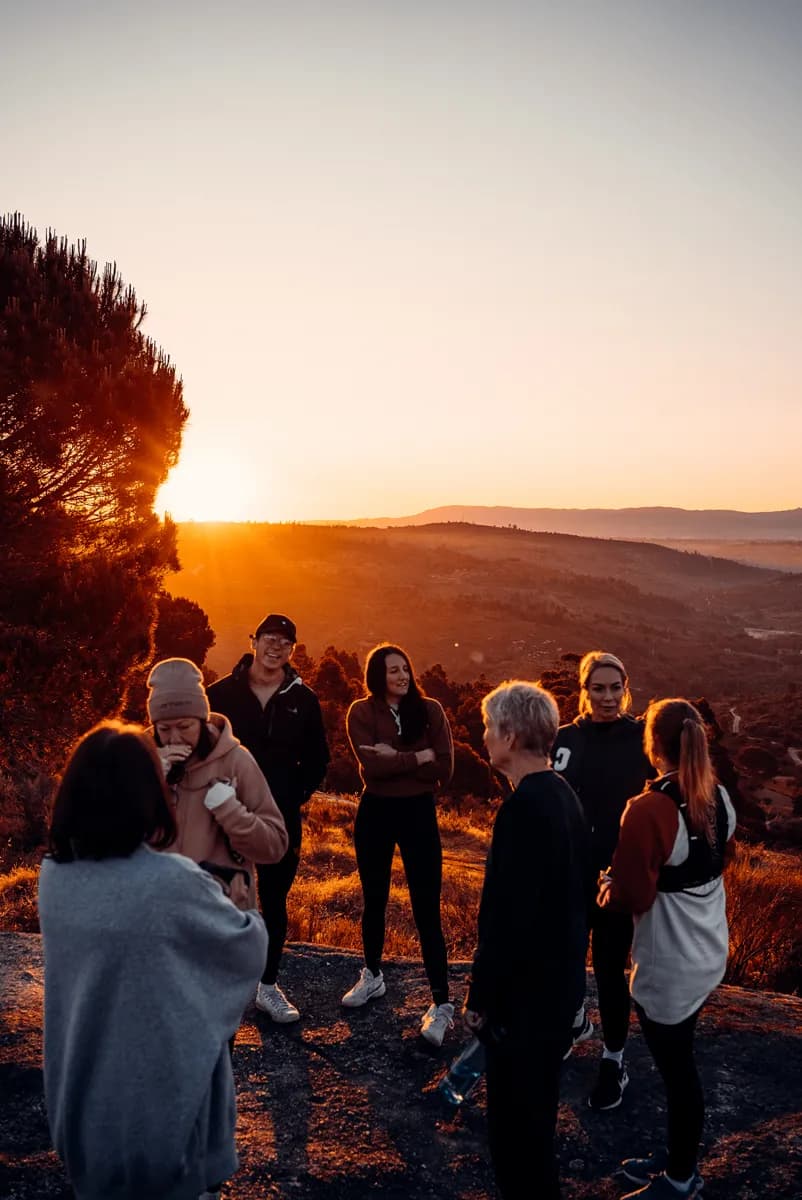
Sharing circles, vulnerability exercises, communal meals, games. This is where the magic happens. Hearing someone else articulate what you have been feeling. Saying something out loud that you have never said before. Laughing with people you met two days ago as if you have known them for years.
Unstructured time
Free time is not a gap in the programme. It is part of the programme. This is where processing happens. A walk by the river, a nap in the sun, a conversation that goes somewhere unexpected. Over-scheduled retreats miss this entirely.
Integration
The best retreats help you plan what happens when you go home. Not just “remember this feeling” but practical strategies for carrying what you have learned back into your real life.
Elysium combines coaching, somatic movement, breathwork, community connection, and five days in an extraordinary setting. It is personal development that you feel, not just understand.
See the Full ProgrammeBest destinations in Europe for personal development retreats
Portugal
The leading destination and for good reason. Climate, food, cost, and landscape all work in your favour. Central Portugal in particular offers the kind of isolation that makes a retreat genuinely immersive. Read our complete guide to wellness retreats in Portugal for the full picture.
Spain
Ibiza (the quiet side, not the clubs), Andalusia, and the Balearic Islands all have strong retreat offerings. Generally warmer and more social than Portugal, with a wider range of luxury options.
Greece
Island retreats with stunning settings. Crete, Corfu, and the Peloponnese offer a combination of ancient culture, warm climate, and natural beauty. The food alone is worth the trip.
Italy
Tuscany and Umbria are popular for retreats that combine personal development with cultural immersion - cooking, art, and the Italian approach to life that the rest of Europe envies. Higher cost, but a unique experience.
Croatia
An emerging destination with beautiful coastal and island properties. More affordable than Western European alternatives, with increasingly sophisticated retreat offerings.
The UK
Scotland, Devon, Cornwall, and the Lake District all host retreats. The advantages are no flights, no language barriers, and landscapes that are genuinely healing. The disadvantage is the weather, which limits outdoor programming for much of the year.
How to choose the right personal development retreat
This is the most important section. A retreat is a significant investment of time and money, and choosing the wrong one is worse than choosing none at all.
Start with what you need, not what looks good
Be honest about where you are. Are you burnt out? Looking for direction? Wanting to reconnect with your body? Seeking community? Different retreats serve different needs. A somatic movement retreat will not help if what you need is coaching. A silent meditation retreat will not help if what you need is connection.
Research the facilitators
Who are they? What is their background? How long have they been doing this? Do they have testimonials from real people? The facilitators make or break a retreat. A beautiful venue with an inexperienced facilitator is a nice holiday. An average venue with a brilliant facilitator is a life-changing experience.
Look for small groups
Under 25 is ideal. Under 15 is intimate. Over 30 is a conference with yoga. The smaller the group, the more attention you get and the deeper the connections become.
Read real testimonials
Not the polished ones on the website. Look for video testimonials, independent reviews, and social media posts from past guests. The language people use is revealing. Generic praise (“it was amazing!”) tells you nothing. Specific stories (“I arrived feeling lost and left knowing what I needed to change”) tell you everything.
Check for post-retreat community
Does the retreat end when you leave, or does the connection continue? Reunion events, community groups, follow-up sessions - these are signs that the organisers care about lasting impact, not just a one-off experience.
Trust your instinct
If a retreat speaks to you - if the copy, the testimonials, the people behind it resonate with where you are - that is data. Personal development is personal. The right retreat will feel right before you can fully explain why.
Going alone vs. going with someone
Most people go alone. And most people are terrified about it beforehand.
Here is the truth: going alone is almost always better. When you go with a friend or partner, you naturally default to the dynamic you already have. You sit together at meals. You debrief with each other instead of processing independently. You stay in your comfort zone because your comfort zone came with you.
Going alone forces you to meet new people, try new things, and sit with yourself in a way that is uncomfortable and essential. Every guest testimonial we have ever read mentions the connections made with strangers as one of the most powerful parts of the experience.
“I honestly never thought I'd do something like this. Living in London with a busy lifestyle, it's easy to get caught up. This has helped take away the noise and reminded me that this is what I genuinely want.”
That said, going with someone can work if you both commit to engaging independently. Set the intention that you will not use each other as a safety blanket, and the experience can deepen both your individual growth and your relationship.
What happens when you come home
The hardest part of any retreat is re-entry. You come back feeling clear, connected, and alive - and within a week, the old routines start pulling you back. This is normal, and it does not mean the retreat did not work.
Here is how to protect what you gained:
- Give yourself a buffer. Do not fly home and go straight back to work the next morning. Build in a day or two to transition.
- Write down what you learned. Not a journal entry - a practical list. What did you realise? What do you want to change? What are you going to do differently? Put it somewhere you will see it daily.
- Keep one practice alive. Breathwork, morning movement, journaling, cold showers - pick one thing from the retreat and make it non-negotiable in your weekly routine.
- Stay connected to the people. Exchange details. Create a group chat. Meet up. The community is part of the transformation, and losing touch with it means losing part of what you built.
- Be patient with yourself. Growth is not linear. You will have days where you feel exactly like you did before. That does not erase what happened. It means you are human.
The Elysium approach to personal development
Elysium Retreats was not built as a personal development retreat in the traditional sense. There is no syllabus. No workbook. No certificate. What there is: five days at an extraordinary off-grid estate in Central Portugal with three facilitators who cover mindset, movement, and coaching from different but complementary angles.
Tommy brings structure: the framework of structure, energy, and identity that helps people who are drifting find their footing again. Claire brings emotional depth: her workshops create the safe space for breakthroughs that most people have never experienced. Al brings the body: somatic movement that reconnects you with the physical experience of being alive.
The result is not a course. It is not therapy. It is something harder to define and more powerful than either. People arrive as strangers and leave knowing something about themselves that they did not know five days earlier. That is personal development in its purest form.
September 16-21, 2027. Central Portugal. 22 spaces. Three coaches. No gimmicks.
View Pricing and BookFrequently asked questions
How much do personal development retreats cost in Europe?
Prices range from £500 for a basic weekend to £3,500+ for a premium week-long retreat. Most quality experiences sit between £1,000 and £2,500, including accommodation and meals. Flights are usually additional.
Do I need to have done personal development work before?
No. Many guests are first-timers who have never done anything like this. A good retreat is designed to meet you where you are, not where you think you should be.
What if I am not the “retreat type”?
Nobody is. Until they go. The most powerful testimonials consistently come from people who almost did not book. If you are reading this and thinking “this is not for me,” you might be exactly the person it is for.
Will I have to share personal things with strangers?
You will be invited to, never forced to. Good facilitators create safety without pressure. Most people find they share more than they expected - not because they were pushed, but because the environment made it feel natural.
Can I attend as a couple?
Usually yes. Some retreats are designed for individuals only, but most welcome couples. Just be prepared to engage independently during sessions - this is about your growth as individuals, which often benefits the relationship more than any couples retreat could.